Spousal consent land sales Kenya: why a clean search isn’t enough
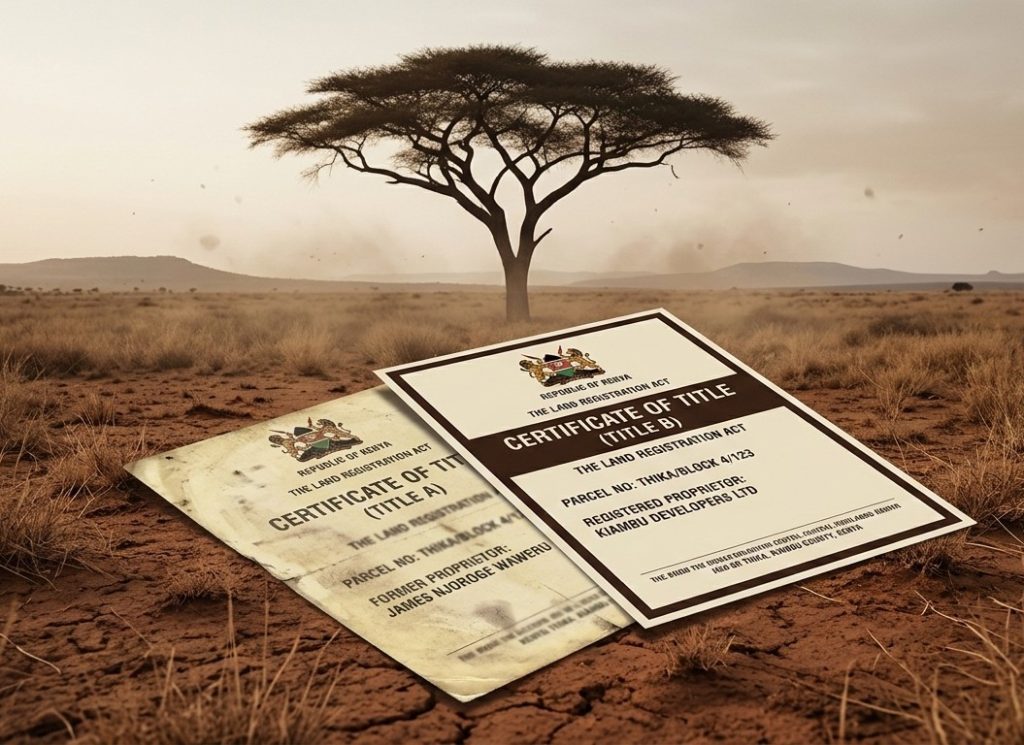
You conducted an official search. The title showed only one name. You paid, transferred, and moved on. Years later, a court summons arrives — the seller’s spouse is suing to nullify the deal. Spousal consent land sales Kenya law protects families in exactly this way, and buyers who don’t know it are the ones who pay for it.
Owning land is the Kenyan dream. Across Thika, Juja, Ruiru, and Murang’a, families and individuals pour their savings into plots for farming, business, or a family home. But the conveyancing landscape has a hidden landmine: buyers who purchase in good faith, only to have the transaction nullified by a court over a lack of spousal consent.
Many buyers assume that if a search shows only one name on the title, that person has the unrestricted right to sell. Under Kenyan law, that’s a dangerous assumption.
The “Clean Search” Illusion
An official land search reveals the registered proprietor, any encumbrances, and prohibitions on the land. If John Doe is listed as sole registered owner of a plot, conventional logic suggests you can simply pay him and take possession. But under Article 45 of the Constitution of Kenya, the family is recognised as the fundamental unit of society, deserving special protection. Parliament built on that by granting a spouse an automatic legal interest in family property — even if their name never appears on the title deed or the registry search.

What the Law Says: Overriding Spousal Rights
Two statutes govern this. Under the Matrimonial Property Act (2013), Section 12 prohibits a spouse from alienating, selling, leasing, or mortgaging matrimonial property without the written and informed consent of the other spouse. The Land Registration Act (2012) goes further: under Section 93, if land is held in one spouse’s name but acquired during the marriage, there’s a legal presumption it’s held in trust for the other spouse, and spousal rights over it are treated as overriding interests — binding on the land whether or not they appear on the register.
What Actually Qualifies as “Matrimonial Property”
Not every plot owned by a married person needs spousal consent to sell — which is exactly why professional conveyancing advice matters. Matrimonial property generally includes:
- The matrimonial home — property owned or leased by one or both spouses and used as the primary family residence.
- Household goods and effects within that home.
- Jointly acquired real estate — commercial plots, agricultural land, or rental apartments acquired during the marriage using family resources.
Property inherited solely from one spouse’s own family, or acquired before the marriage, generally remains separate — unless the other spouse made substantial financial or non-financial contributions toward developing or improving it.
What the Courts Have Actually Said
In Mary Wanjiru Njuguna v Peter Weru Kabui & 2 Others [2020] eKLR, the court held that property acquired during a marriage and used as the family home qualified as matrimonial property, reinforcing that spousal consent requirements apply broadly where the facts fit. Where consent was required and never obtained, courts have been willing to declare the resulting sale void.
But the protection isn’t automatic in every direction. In its 2025 ruling in Resma Commercial Agencies v Ngattah, the Court of Appeal clarified that spousal consent is not required where the property in question doesn’t actually qualify as matrimonial property — even where a couple has used it for a long time. The outcome always turns on the specific facts: how the property was acquired, how it’s been used, and what each spouse contributed.
We help buyers verify marital status, draft enforceable spousal consent documents, and avoid the mistakes that lead to a sale being challenged years later.
The Land Control Board Safeguard
For agricultural land in areas like rural Kiambu, Murang’a, or Machakos, the Land Control Act (Cap 302) adds another layer: parties must appear before a local Land Control Board to obtain consent before agricultural land can be transferred. Boards have increasingly required the seller to appear alongside their spouse, with original identity cards and a marriage certificate, before granting consent.

The Buyer’s Due Diligence Checklist
- 1Physical inspection and community verification. Visit the property, speak to neighbours, and confirm who actually lives on or uses the land — neighbours often know if a spouse or family is connected to a plot.
- 2A sworn declaration of marital status. Have the seller execute an affidavit; a false declaration carries criminal liability for perjury.
- 3Written spousal consent where the seller is married. Never rely on a verbal assurance — the consent should be a formal document, signed by the spouse in the presence of an independent advocate who confirms they understand the transaction.
Frequently Asked Questions
If a land search shows only one name on the title, is spousal consent still needed?
Possibly. Under Section 93 of the Land Registration Act, if land was acquired during a marriage, there’s a legal presumption it’s held in trust for the other spouse even if only one name appears on the title. A clean search alone does not rule out a spousal consent requirement.
What happens if a land sale goes ahead without spousal consent?
The non-consenting spouse can petition the Environment and Land Court to have the sale declared void. If successful, the title reverts to the family, and the buyer is left to pursue the seller separately to recover the purchase price.
Is spousal consent required for all property owned by a married person?
No. Property acquired before the marriage, or inherited separately, generally remains separate property unless the other spouse made substantial contributions to it. The Court of Appeal’s 2025 ruling in Resma Commercial Agencies v Ngattah confirmed that consent is not automatically required where property doesn’t actually qualify as matrimonial.
How can a buyer protect against a spousal consent dispute?
Beyond the registry search, buyers should verify the seller’s marital status through a sworn declaration, speak with neighbours about who occupies the land, and obtain formal written spousal consent — signed before an independent advocate — whenever the seller is married.
Buying land is one of the biggest financial decisions most families make. A shortcut in due diligence can turn that investment into a years-long dispute. Whether you’re buying a residential plot in Juja, commercial land in Thika Town, or agricultural acreage in Murang’a, having an advocate examine the chain of ownership and confirm the necessary consents is what actually protects the purchase — not the search result on its own.
Planning to purchase property in Kenya?
Job Kerry Ngeresa & Co. Advocates conducts thorough conveyancing due diligence for buyers across Thika and the Mt. Kenya region.